DTF printing vs DTG: which is better for a t‑shirt?
26 Oct 2026 · Zojo · 5 min read
DTF printing prints your design onto a sheet of film first and then heat-presses it onto the t-shirt, so the print sits on top of the fabric as a thin layer. DTG prints the ink straight into the cotton, so it feels softer but works best on cotton. For a detailed, full-colour design on a cotton tee, DTG is usually the better pick, and it's what we use for every ZOJO tee, including our terry oversized t-shirts. DTF wins on polyester, mixed fabrics and small logo prints.
Here's how each one works, how they feel, and how to tell which one you're buying.
How DTF printing works
DTF stands for direct-to-film. The printer puts the design in mirror image onto a clear PET film: the colours first, then a layer of white ink behind them so the colours stay bright on any fabric. While that ink is still wet, a fine hot-melt adhesive powder is spread over it and melted on.
That sheet is now a transfer. It can be stored for later or pressed straight away. At the press, it goes onto the tee at about 160 to 170 °C for 10 to 15 seconds, and the film is peeled off. The design stays on the shirt, held there by the melted glue.
Two things follow from this. DTF doesn't need the fabric to be treated first, and it works on a wider range of materials than DTG, including polyester and blends. The trade-off is feel: the print is a layer on top of the shirt, and it can feel a bit plasticky.
How DTG printing works
DTG stands for direct-to-garment. It works like an inkjet printer, except the paper is the t-shirt. The shirt is usually pre-treated, laid flat, and the printer sprays the design straight onto it.
The ink soaks into the cotton fibres instead of sitting on top. That's why a DTG print feels soft and can carry gradients, fine lines and many colours without extra cost per colour. It also means DTG works best on cotton. Heavier cotton holds more ink and wears better, which is one reason we print on 240 GSM cotton and 260 GSM terry for our oversized tees. We went into that in what GSM an oversized t-shirt should be.
DTF vs DTG side by side
| | DTF | DTG | | --- | --- | --- | | How the print gets on | Printed on film, then heat-pressed | Printed straight onto the shirt | | Feel | A thin layer on top, can feel plasticky | Soaked into the fibres, soft | | Best fabrics | Cotton, polyester, blends | Cotton and high-cotton blends | | Fabric pre-treatment | Not needed | Usually needed | | Good for | Logos, small prints, sports fabric, printing ahead | Detailed full-colour art, one-off tees | | Ironing | Inside out, never on the print | Inside out, never on the print |
Which one is better for a t-shirt?
It depends on the shirt and the design.
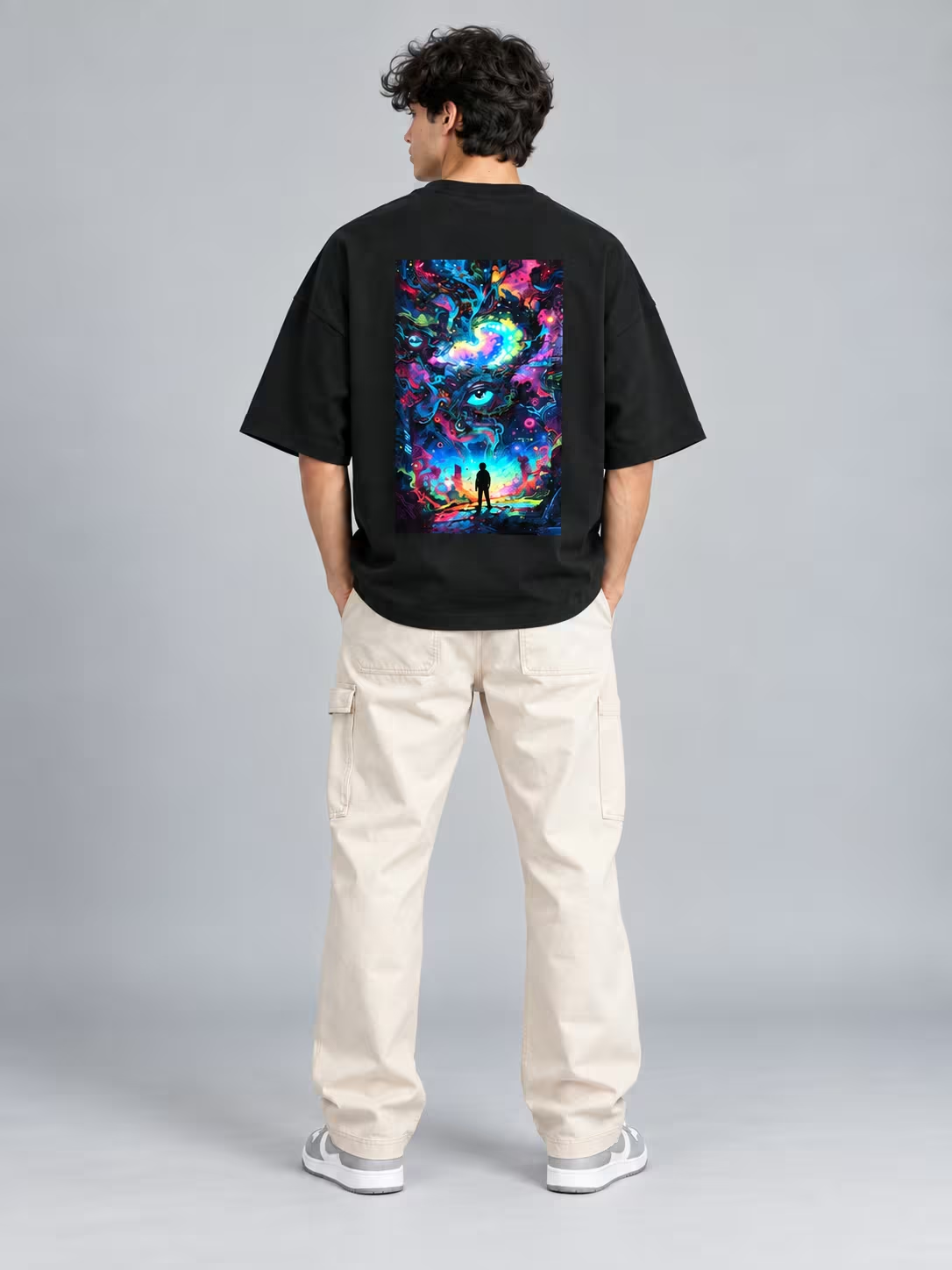
Pick DTG when the tee is cotton and the art is detailed. A full-colour trippy print or a painted Shiva design looks better when the ink is part of the fabric. You also don't get a stiff patch on your chest in summer. Our Psychedelic Trippy terry tee is a good example of the kind of print DTG handles well.
Pick DTF when the shirt is polyester, like most gym and sports tees, or when it's a small logo or a name on a jersey. It's also handy for a print shop that wants to press transfers in bulk later.
For an everyday graphic tee in India, a soft print on breathable cotton is what most people want, so DTG on cotton is our choice. If a DTG print is cared for, it fades slowly rather than peeling. We covered the causes of cracking in does DTG printing crack, and the older DTG vs screen print post compares it with the third main method.
How to tell which one your tee has
Run your hand over the print. If you can feel a smooth layer with a clear edge, like a sticker on the fabric, it's probably DTF or another transfer. If the print feels almost like the rest of the shirt and the fabric texture still shows through, it's DTG.
Look at the edges. A DTF transfer has a sharp outline because it was cut from film. DTG edges blend a little into the weave.
Stretch it gently. A transfer stretches as one piece. A DTG print moves with the threads.
How to make either print last
The care is almost the same for both:
- Turn the tee inside out before washing.
- Wash in cold water and skip bleach.
- Dry on low heat, or hang it in the shade.
- Iron it inside out, never on the print.
Our guide to washing printed t-shirts goes into more detail. If you want to see how print on demand ties all of this together, read what print on demand is. Every tee in our oversized t-shirts range is printed this way after you order, and it usually ships in 24 to 48 hours.
FAQs
Is DTF printing better than DTG?
Not always. DTF is better on polyester and blends and for small logos. DTG is better for detailed, full-colour art on cotton, and the print feels softer.
Does DTF printing feel like plastic?
It can. The print is a thin layer of ink and glue on top of the fabric, so it feels smoother and stiffer than DTG, especially on large designs.
Does DTF work on cotton?
Yes. DTF works on cotton as well as polyester and blends, because the glue holds the print on rather than the fibres soaking up the ink.
Can you iron a DTF or DTG print?
Yes, but turn the tee inside out and keep the iron off the print. Direct heat can damage both.
Which printing does ZOJO use?
DTG, on every tee, printed after you order. Our oversized tees are 240 GSM cotton and our terry tees are 260 GSM, a 90% cotton and 10% polyester terry.